Priority Pass™
- 4.3
- Rating
- 5.00M
- Installs
- Free
- Price

 Analysis by App-foxy
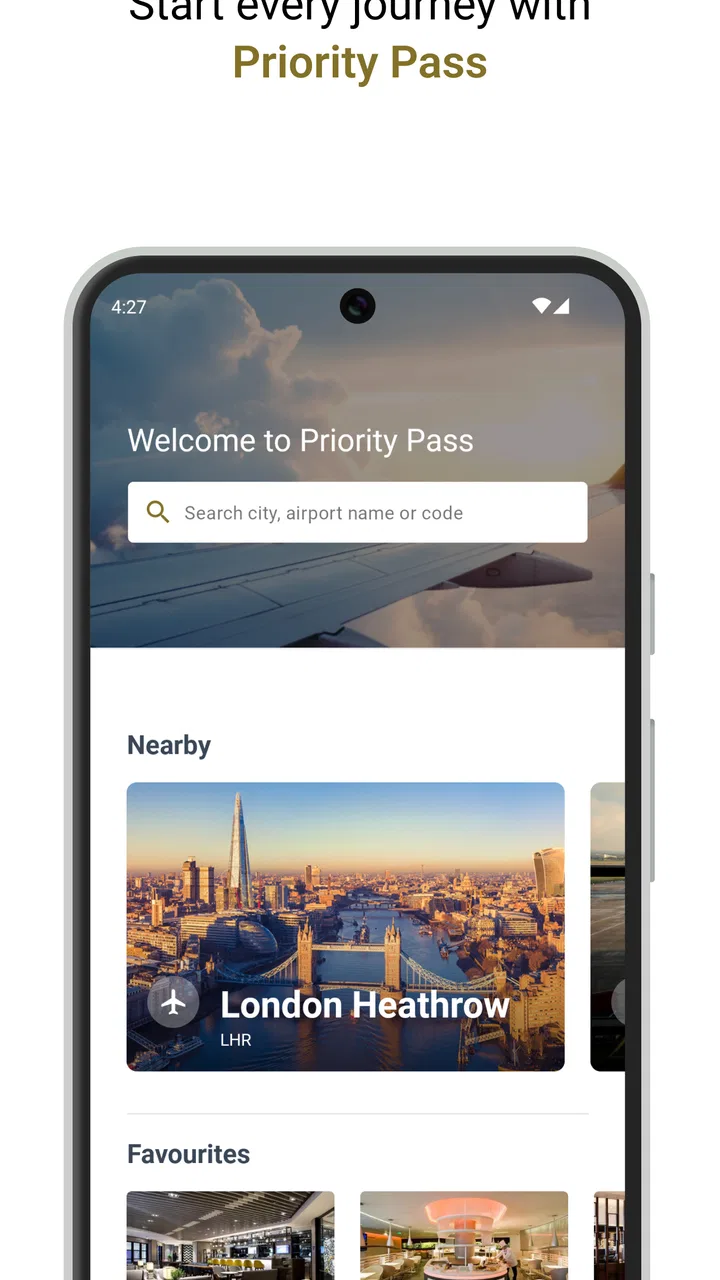
Airport waiting feels very different when you know exactly where you can sit, recharge, eat, or simply get away from the main terminal noise. That is the practical promise behind Priority Pass™, a free Travel & Local app from Priority Pass that helps members find and access more than 1,500 airport lounges around the world. I found it most useful as a planning tool rather than something to open only after arriving at the airport.
The app is aimed at travelers who already have Priority Pass access through a membership or an eligible benefit. Installing it costs nothing, and the content rating is Everyone, so it is straightforward to recommend for adult travelers and families alike. Its current version is 6.69.0, and it runs on Android 8.0 or later. With an average rating of 4.4 from around 53,000 ratings and more than 5 million installs, it is clearly an established travel companion rather than a niche airport directory.
What to expect before your first airport visit
The first thing to understand is that this is not a general flight-booking app. It is not designed to replace an airline app, a boarding-pass wallet, a live flight tracker, or a map application. Its job is narrower and, when used for the right reason, more useful: helping you identify participating lounges and understand where they are located before you commit to crossing an airport.
You May Also Like

 Blood Strike: 2.5 Anniversary
Blood Strike’s Loadouts Turn Every Drop Into a Tactical Gamble
A close look at Blood Strike’s custom loadouts: how fast access to signature weapons reshapes its battle royale rhythm, rewards preparation, and narrows the gap between fights.

 Pandora - Music & Podcasts
Pandora’s Music Is Easy to Start, but Harder to Recover
Pandora’s strength is its low-effort path from a seed to a station. Its weak spot is how much confidence it asks you to place in connection, setup, and quiet recovery.

 8 Ball Pool
 Is Built on Rivalries, Rematches, and Routine
A close look at the rivalries, rematches, shared routines, and unanswered safety questions that turn a quick pool match into a persistent mobile community.

 Samsung Music
’s Quiet Strength Is Playing What You Already Own
Its reach comes less from spectacle than from dependable access to a personal library. That simplicity is both the app’s strongest retention engine and its ceiling.

 AccuWeather: Weather Radar
AccuWeather Review: A Quick, Clear Forecast for Everyday Decisions
For everyday plans, the best forecast is the one you can understand quickly. AccuWeather makes rain timing, radar, and local conditions easy to act on, with a few trade-offs.

 Hill Climb Racing
Why Hill Climb Racing Still Turns Crashes Into One More Run
A tiny car, a bumpy hill and one more upgrade: Hill Climb Racing keeps resurfacing because its simple chaos makes every near-miss feel personal.
More From Our News Desk
View All News


That distinction matters because lounge access is rarely as simple as seeing a lounge name and walking in. Airport terminals can be separated by security areas, immigration controls, concourses, and transport links. A lounge may be close on a map but inconvenient or impossible to reach from your departure area. I therefore treat the app as one part of my airport plan, alongside my airline’s flight information and the terminal map.
On a typical journey, I would use it after checking the airport and terminal for my flight. I would search for the airport in Priority Pass, inspect the available locations, and read the individual lounge information before deciding whether the detour is worthwhile. This avoids the common mistake of assuming that the nearest-looking lounge is automatically the best choice.
The strongest use case is a long connection. Instead of wandering through unfamiliar gates looking for somewhere quiet, I can check whether a lounge is available in the relevant part of the airport and decide how much time to allow for reaching it. The same approach works before an early departure, especially when I want to know whether arriving earlier will give me a practical place to work or rest.
There is also value for travelers who do not visit lounges often. You do not need to be an experienced frequent flyer to benefit from the directory. The app makes the idea less abstract: rather than wondering whether an airport has a lounge, you can investigate the location before leaving home. That small step can make a busy itinerary feel much more manageable.
Still, I would not install it expecting every airport visit to become luxurious. Lounge availability, opening arrangements, terminal access, and crowding can affect the experience. The app can help you make a better decision, but it cannot remove the physical limitations of the airport or guarantee that a lounge will suit your schedule.
Who gets the most value from it
I think the app is particularly useful for people with connections, travelers who regularly depart from different airports, and anyone whose access comes through a bank card or travel membership and is easy to forget. It is also handy for people who like to plan the practical details of a trip in advance instead of making decisions while carrying luggage.
It is less compelling for someone who flies from one small airport only occasionally and never expects to use a lounge. If your airline already gives you a clear, reliable lounge option and you have no interest in alternatives, the extra directory may not change much. Likewise, if your priority is live flight disruption information, the airline’s own app will usually be the more relevant first stop.
Setting up the app without overthinking it
After installing it, I would begin by signing in with the Priority Pass membership details connected to my access. The important goal is not merely to browse attractive lounge photos or names; it is to make sure the app recognizes the membership or access method I intend to use. Doing this before the travel day gives me time to correct a forgotten password or account mismatch without standing in a security queue.
I also recommend checking the app while connected to a dependable network and keeping the account information available in a secure password manager. This is a small preparation step, but it prevents a frustrating airport scenario in which the app is installed yet the user cannot complete the sign-in process.
Once inside, I would search for an airport I already know I will use. Starting with a real upcoming trip is more useful than exploring random airports. It lets me check whether the results make sense for my terminal, and it gives me a clear reason to inspect the lounge details carefully.
One practical habit is to review the airport twice: first when planning the trip, and again shortly before departure. I would not rely on an old mental snapshot of the terminal. Airport layouts and operating arrangements can make a previously convenient lounge less useful, so a quick revisit helps me avoid planning around assumptions.
The app’s free download is helpful here because it lowers the barrier to preparation. You can install it before deciding how often you will use it. However, the free installation should not be confused with universal lounge entry. Your access still depends on the Priority Pass arrangement attached to your account or travel benefit. That is an important distinction for first-time users.
Your first successful action: finding a lounge you can actually reach
For me, a successful first use is not simply opening the app and seeing a list. It is finding a lounge at the correct airport, confirming its position relative to my route, and deciding whether it fits the time available. That workflow produces a useful result before I have even left home.
I start by entering the airport rather than searching broadly for lounges. Then I compare the listed locations with my departure terminal and expected movement through the airport. If I have a connection, I ask a different question: can I reach the lounge without leaving the secure area or creating a risky transfer? The answer depends on the airport layout, so this is where careful reading matters more than a quick glance at the map.
A useful trick is to plan the lounge as an optional stop, not the foundation of the itinerary. I allow enough time for check-in, security, walking, and finding the gate first. Only after those essentials are covered do I decide how long I can spend inside. This prevents the common error of turning a pleasant lounge visit into a rushed dash to boarding.
Imagine a realistic connection where I have a couple of hours between flights. I would check the connecting airport in advance, note which lounge is closest to the next gate area, and identify whether another terminal transfer is involved. After landing, I would follow the airport’s signs and use the app as a reference rather than staring at the screen while walking. If the route proves longer than expected, I can abandon the lounge plan without losing valuable time.
That flexibility is one of the app’s underrated strengths. A directory is useful not only when it leads to a lounge, but also when it helps me decide that a lounge is not worth the detour. Knowing that before I start walking is a meaningful travel benefit.
When I reach the lounge, I would keep the app and membership information ready, but I would also follow the lounge’s own entry process. The app helps identify the location and access relationship; it does not replace the staff’s check-in procedure. Keeping expectations realistic makes the arrival smoother.
Where first-time users commonly get confused
The biggest confusion is usually the difference between being able to see a lounge and being entitled to enter it. A lounge appearing in the app does not mean every traveler can use it without the appropriate Priority Pass access. Before planning a meal, shower, or quiet work session around a lounge, I would confirm that my account and membership arrangement support entry.
A second source of confusion is terminal position. Airport search results can make several lounges look equally convenient, but the terminal you can enter and the route you must take are decisive. A lounge in another concourse may be technically nearby while still being impractical for a short connection. I always compare the listing with the airport signs and my boarding information.
Another subtle issue is timing. A lounge can be a good match for a daytime departure but a poor choice for a very early or late itinerary. I would check the information shown for the specific lounge rather than assuming that every location follows the same schedule or offers the same environment. The app is more useful when I treat each lounge as an individual place, not as a standardized room.
Travelers may also expect the app to solve every airport problem in one screen. It does not. I still need my airline app for gate changes, my boarding pass for the flight, and the airport’s own signs for navigation. Priority Pass works best when it fills the lounge-discovery gap instead of trying to become an all-purpose travel dashboard.
There is a further trade-off between convenience and certainty. The app can help me plan, but airport conditions can change after I have checked the listing. A lounge may be busy, a route may take longer than expected, or an operational restriction may affect the visit. I therefore keep a backup plan: a gate-area café, a quieter seating zone, or simply enough time to wait without depending on lounge access.
Three smarter ways to use it after the basics
First, I use the app before booking a complicated itinerary, not only after buying the ticket. If two connection airports are otherwise similar, lounge availability and terminal layout can become a deciding factor. This does not mean choosing a route solely for a lounge, but it adds a practical quality-of-life consideration that flight-price comparisons often miss.
Second, I use it to coordinate with travel companions. If one person wants to work, another needs food, and a child needs a calmer place to sit, checking the lounge location before arrival helps set realistic expectations. The key is to discuss the lounge as a convenience rather than a guaranteed solution. That keeps the group from losing time if the route or access does not work out.
Third, I make a personal airport note after each visit. I record which terminal I used, how long the walk felt, and whether the lounge fitted my schedule. The app supplies the discovery point, while my own notes build a more useful travel memory. On a future journey, I can open the listing and immediately compare it with what I experienced instead of treating every airport as unfamiliar.
A fourth useful habit is to check alternatives within the same airport when several locations appear. The closest lounge is not always the best one for my gate, and the most attractive description is not necessarily the most convenient choice. Comparing the route, timing, and likely purpose of the visit—work, food, rest, or a short break—produces a better decision than choosing the first result.
How it compares with the usual alternatives
Compared with searching the web, the app is more focused because it keeps the lounge network and airport context together. A general search may return outdated blog posts, hotel-style lounge reviews, or results for lounges that use a different access program. Priority Pass is more direct when the question is specifically about locations available through this service.
Compared with an airline app, it has a different advantage. Airline software is usually better for flights, gates, boarding passes, and disruption notices, while this app is better for exploring lounge options beyond one airline’s own network. I would use both rather than trying to make one replace the other.
Compared with a bank-card travel portal, the Priority Pass app feels more relevant when I already know that my access is tied to Priority Pass. A card portal may explain the benefit, but a dedicated app is the more natural place to investigate the actual airport experience. The trade-off is that users must understand their own membership terms instead of assuming that a card benefit automatically covers every visit.
Compared with simply asking airport staff, the app gives me time to plan before reaching the terminal. Staff can still be valuable for directions, especially when signs are confusing, but I prefer arriving with a basic idea of the lounge location and route already in mind.
What I would improve in my own routine
I would avoid opening the app for the first time on a crowded travel morning. The better workflow is to sign in at home, search the next airport, inspect the relevant terminal, and decide on a primary lounge plus a backup plan. That sequence turns the app from a last-minute search box into a small but useful part of trip preparation.
I would also keep expectations proportional to the length of the stop. For a very short connection, the walk to a lounge, entry process, and return to the gate may consume most of the available time. For a long connection, the same effort can be worthwhile. The app helps me locate the opportunity, but I still have to judge whether the time economics make sense.
For travelers who work while flying, I would check the route before promising myself a productive session. A lounge may offer a calmer setting than the terminal, but the journey to it and the need to return to the gate can interrupt concentration. I use it as a flexible workspace, not as a guaranteed office.
For families, I would explain the plan before entering the airport: where we might go, how long we can stay, and what happens if the lounge is too far away. This avoids making children or companions feel that the entire trip depends on finding one particular room. The app supports a smoother plan when everyone understands that it is an option.
My recommendation for a first-time user
I recommend Priority Pass to travelers who want a clear way to investigate lounge access before an airport visit, especially when their journey includes a connection or an unfamiliar terminal. The free app is easy to justify as a planning tool, and its broad lounge directory gives it more practical value than a generic airport search.
I would skip it if you are looking for live flight management, airline-specific boarding tools, or a guarantee that every lounge will be accessible at every moment. Those are different needs, and another travel app may serve them better. I would also avoid depending on it without checking the membership connected to your account and the physical route through the airport.
After using it, my preferred next step is simple: choose one upcoming airport, find the lounge closest to the part of the terminal I can actually reach, and plan the visit around my gate rather than around the lounge itself. That is where the app becomes genuinely useful. It does not make the airport disappear, but it gives me a better-informed option inside it.
Overall, I see Priority Pass as a practical companion for lounge planning, not a complete travel manager. Its value comes from preparation, sensible expectations, and knowing when not to make the detour. For the right traveler, the most useful feature is the confidence to decide before reaching the airport, and that is enough to make this free Travel & Local app worth keeping installed.
FAQs for Priority Pass™
01What is Priority Pass™ and how does it work?
Priority Pass™ is a membership program offering access to over 1300 airport lounges worldwide. Members can enjoy amenities such as Wi-Fi, refreshments, and comfortable seating. To use it, download the app, log in with your membership details, and find participating lounges at your departure or arrival airports.
02How much does a Priority Pass™ membership cost?
Membership costs vary based on the plan you choose. There are three main tiers: Standard, Standard Plus, and Prestige. Each offers different levels of access and benefits, from pay-per-visit to unlimited lounge access. Prices can be checked on the official website or within the app.
03Can I bring guests with me into a lounge?
Yes, Priority Pass™ allows you to bring guests, but fees may apply depending on your membership level. Some plans offer complimentary guest access, while others charge a nominal fee per guest. Be sure to check the terms of your membership for details about guest policies.
04Is Priority Pass™ available at all airports?
Priority Pass™ is available at over 600 cities across 148 countries, covering many major international airports. However, not every airport has a participating lounge. It's advisable to check the app or website for specific locations and ensure the lounge is open during your travel times.
05How do I add Priority Pass™ to my digital wallet?
You can add your Priority Pass™ to your digital wallet for quick access. Open the app, navigate to your membership card, and follow the prompts to add it to Apple Wallet or Google Pay. This feature allows you to easily access your membership without needing a physical card.
Pros
- Wide global lounge network access.
- Easy-to-use interface for quick navigation.
- Frequent updates with new locations.
- Exclusive offers and discounts available.
- Digital membership card for convenience.
Cons
- Membership costs can be high.
- Limited guest access without extra fees.
- Some lounges have time restrictions.
- Varying lounge quality and amenities.
- Limited coverage in remote airports.

Priority Pass™
Gallery